Shared Hosting vs VPS Hosting: Which Is Best for High-Traffic Websites?
- December 15, 2025
- 2 Comments
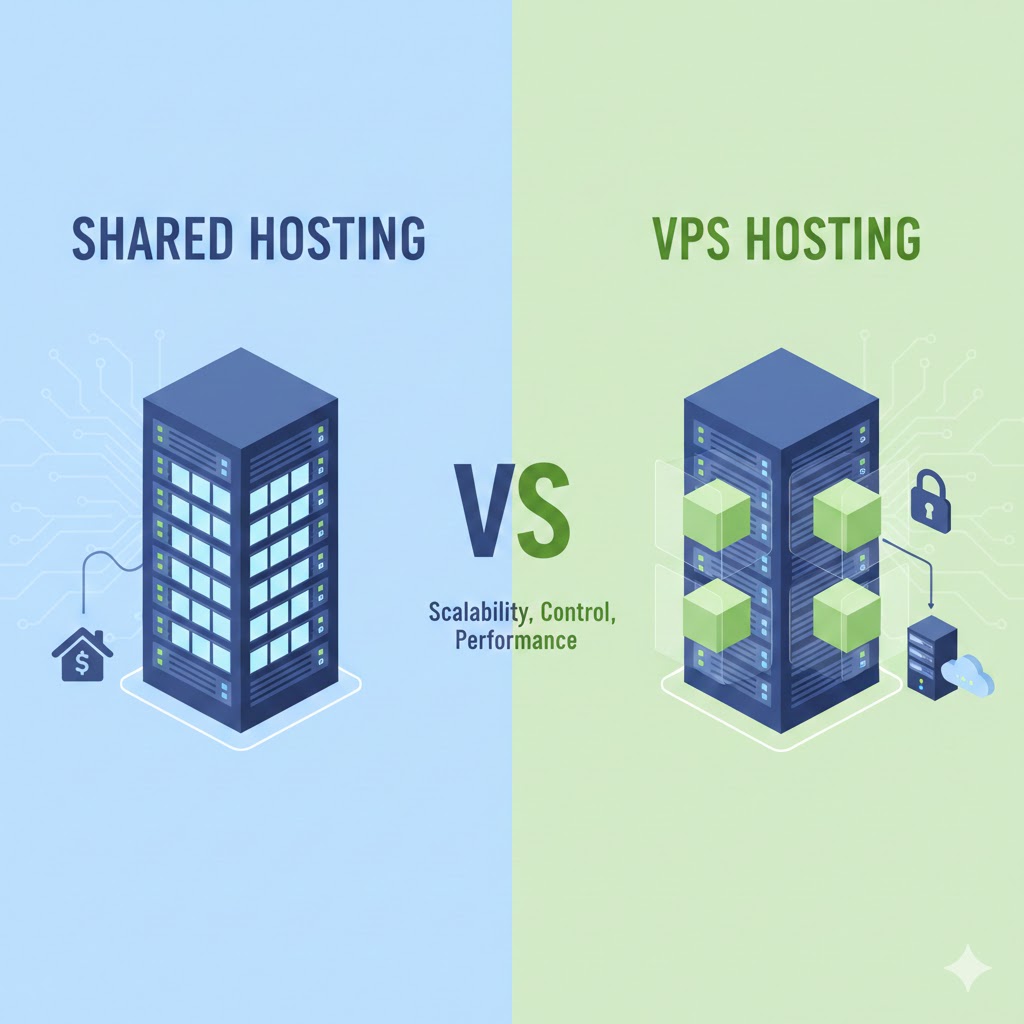
Choosing the right hosting solution is a critical decision for website owners, especially when traffic starts to grow. A website’s performance, uptime, and security depend heavily on the hosting environment. Two of the most widely used hosting solutions are Shared Hosting and VPS (Virtual Private Server) Hosting.
Shared hosting is often the first choice for beginners because of its affordability, while VPS hosting offers more control, resources, and scalability. For websites experiencing high traffic, selecting the right option can directly impact user experience, search engine rankings, and business revenue.
This article provides a detailed comparison of shared and VPS hosting for high-traffic websites, helping you make an informed choice.
What is Shared Hosting?
Shared hosting is a hosting environment where multiple websites share the same server resources such as CPU, RAM, storage, and bandwidth. It is the most common hosting type for small to medium websites, personal blogs, and startups.
Key Features of Shared Hosting
- Multiple websites share the same server resources.
- Managed by the hosting provider, including updates, security, and maintenance.
- Cost-effective, making it ideal for small websites and businesses.
- Limited control over server configuration and software installations.
Benefits of Shared Hosting
- Low Cost: Shared hosting is inexpensive, often starting as low as a few dollars per month.
- Ease of Use: Most shared hosting comes with user-friendly control panels like cPanel or Plesk.
- Managed Maintenance: Hosting provider handles server management, security, and software updates.
Limitations of Shared Hosting for High-Traffic Sites
- Limited Resources: Shared CPU, RAM, and bandwidth can lead to slow performance during traffic spikes.
- Security Risks: A vulnerability in one website can affect others on the same server.
- Scalability Issues: Upgrading resources is limited; high-traffic websites may quickly outgrow shared hosting.
- Downtime Risk: Traffic surges from other websites on the server can impact your site’s uptime.
What is VPS Hosting?
VPS (Virtual Private Server) hosting is a type of hosting that uses virtualization technology to provide dedicated server resources to each website. Though multiple VPS accounts can exist on a single physical server, each functions independently with its own operating system, CPU, RAM, and storage.
Key Features of VPS Hosting
- Dedicated resources for each website, ensuring consistent performance.
- Full control over server settings, software, and configurations.
- Scalable to accommodate growing traffic and resource needs.
- Enhanced security compared to shared hosting.
Benefits of VPS Hosting
- Improved Performance: Dedicated CPU, RAM, and storage allow high-traffic websites to load faster.
- Better Security: Isolated environments prevent other websites from affecting your site.
- Customizable: Full root access allows advanced configuration and software installations.
- Scalability: Easily upgrade resources to handle traffic growth and spikes.
- Reliable Uptime: Less affected by other websites’ traffic or server load.
Limitations of VPS Hosting
- Higher Cost: VPS hosting typically costs more than shared hosting.
- Technical Knowledge Needed: Managing VPS may require server management skills, though managed VPS plans reduce this burden.
- Maintenance Responsibility: Depending on the plan, users may be responsible for updates, backups, and security.
Shared Hosting vs VPS Hosting: Key Differences
| Sr.no | Feature | Shared Hosting | VPS Hosting |
|---|---|---|---|
| 1. | Server Resources | Shared among multiple websites | Dedicated virtual resources |
| 2. | Performance | May slow down with high traffic | Consistent and faster performance |
| 3. | Security | Vulnerable if other websites are compromised | Isolated and more secure environment |
| 4. | Cost | Low, beginner-friendly | Higher, suitable for growing websites |
| 5. | Control | Limited | Full root access and customization |
| 6. | Scalability | Limited, may require migration | Easily scalable to handle growth |
| 7. | Ideal For | Small blogs, personal websites | Medium to large businesses, high-traffic websites |
Performance Comparison
For high-traffic websites, performance is crucial. Shared hosting can handle low to moderate traffic efficiently, but when visitor numbers increase, page load times can slow down, leading to higher bounce rates and poor user experience.
VPS hosting provides dedicated resources, ensuring consistent speed and reliability. It can handle thousands of simultaneous visitors without affecting performance, making it ideal for e-commerce stores, news portals, and membership sites.
Security Considerations
Website security is another critical factor. With shared hosting, your website shares server resources with multiple sites, so a security breach on one site could put the others at risk.
VPS hosting offers isolated environments, reducing the risk of external attacks. Advanced security features such as firewalls, DDoS protection, and regular backups can be implemented more effectively on VPS servers.
Scalability for Growing Websites
As your website traffic increases, scalability becomes a major concern. Shared hosting has limited scalability. If your website grows rapidly, you may experience slow performance or frequent downtime, necessitating migration to a higher-tier hosting plan.
VPS hosting is highly scalable. You can upgrade CPU, RAM, and storage without significant downtime, accommodating traffic spikes during product launches, marketing campaigns, or seasonal traffic increases.
Cost Comparison Between The Two
Shared hosting is affordable, making it the preferred choice for startups and small websites. VPS hosting costs more due to dedicated resources, enhanced security, and higher performance. However, for websites expecting high traffic or growth, VPS hosting is a cost-effective long-term solution because it prevents lost revenue from downtime and slow performance.
Who Should Choose Shared Hosting?
Shared hosting is best for websites with:
- Low to moderate traffic
- Limited budgets
- Basic website functionality such as blogs, portfolios, or small business sites
- Minimal technical requirements
It’s a great starting point, but businesses anticipating rapid growth should plan for an upgrade to VPS or dedicated hosting.
Who Should Choose VPS Hosting?
VPS hosting is ideal for websites that:
- Receive moderate to high traffic regularly
- Require fast load times and reliable uptime
- Handle sensitive data such as e-commerce transactions or user accounts
- Need advanced customization or specific server configurations
- Plan to scale resources as the website grows
VPS hosting provides the flexibility and performance that growing websites need to maintain user satisfaction and SEO rankings.
Tips for Choosing the Right Hosting for High Traffic
- Estimate Traffic Volume: Analyze current and projected visitors to determine resource requirements.
- Check Resource Allocation: Ensure enough CPU, RAM, and storage for expected traffic spikes.
- Consider Managed vs Unmanaged VPS: Managed VPS reduces technical responsibilities but costs more.
- Evaluate Security Features: Look for SSL certificates, DDoS protection, firewalls, and backup options.
- Scalability Options: Choose hosting that allows seamless resource upgrades without downtime.
- Performance Monitoring: Ensure hosting providers offer uptime guarantees and performance monitoring tools.
Frequently Asked Questions – (FAQ’s)
Q1. Can shared hosting handle high traffic?
Shared hosting is suitable for low to moderate traffic. High traffic can cause slow performance and downtime.
Q2. Is VPS hosting secure for sensitive data?
Yes, VPS offers isolated environments, making it more secure for e-commerce and websites handling sensitive information.
Q3. Can I upgrade from shared hosting to VPS?
Yes, most providers offer seamless migration from shared hosting to VPS as your website grows.
Q4. Which is more cost-effective in the long run?
While shared hosting is cheaper initially, VPS can save money in the long term by preventing downtime and supporting growth.
Q5. Do I need technical skills for VPS hosting?
Managed VPS plans reduce technical responsibilities, while unmanaged VPS requires server management knowledge.
Q6. How does hosting affect SEO?
Website speed, uptime, and security impact SEO. VPS hosting generally offers better performance, supporting higher rankings.
Q7. Can VPS handle traffic spikes?
Yes, VPS is designed to manage resource-intensive operations and sudden increases in traffic without downtime.
You Might Also Like This:
- Optimizing VPS Hosting for High Traffic Websites: Tips and Best Practices
- How to Optimize Your VPS for Maximum Speed and Performance
- When Should You Upgrade from Shared Hosting to VPS?
Conclusion:
For high-traffic websites, choosing the right hosting plan is critical to ensure performance, security, and scalability. Shared hosting is suitable for small websites and those just starting online due to its low cost and ease of use. However, it may struggle under high traffic and offers limited security and scalability.
VPS hosting, on the other hand, provides dedicated resources, enhanced security, and the ability to scale efficiently, making it the better choice for medium to large websites or businesses expecting rapid growth. While the cost is higher, the benefits in performance, reliability, and flexibility often justify the investment for high-traffic sites.
Get more stuff
Subscribe to our mailing list and get interesting stuff and updates to your email inbox.
Thank you for subscribing.
Something went wrong.
Latest Posts
Managed vs Unmanaged VPS: Which Is Right for Your Business?
Offshore VPS Hosting for Anonymous Websites: A Practical Guide



Comments
When Should You Upgrade from Shared Hosting to VPS? – Blog | LunarVps
[…] Shared Hosting vs VPS Hosting: Which Is Best for High-Traffic Websites […]
10 Common VPS Hosting Myths That Confuse New Users – Blog | LunarVps
[…] Shared Hosting vs VPS Hosting: Which Is Best for High-Traffic Websites? […]