When Should You Upgrade from Shared Hosting to VPS?
- December 16, 2025
- 1 Comment
Starting a website is exciting, and for most people, shared hosting is the first step. It is affordable, easy to use, and works well for small websites. Bloggers, personal projects, and early stage business sites often find shared hosting sufficient in the beginning.
However, as time passes and a website grows, shared hosting can slowly become a limitation rather than a solution. Pages may load slower, traffic spikes can cause errors, and simple updates may feel restricted. Many website owners experience these problems without realizing that hosting is the root cause.
This is where VPS hosting becomes relevant. A Virtual Private Server offers better performance, stronger security, and more flexibility while still remaining cost effective. The real challenge is knowing exactly when the time is right to upgrade. This guide explains that decision in a clear and simple way so anyone can understand it, even without technical knowledge.
Understanding Shared Hosting and VPS Hosting
Before deciding to upgrade, it helps to clearly understand how shared hosting and VPS hosting actually work.
What Is Shared Hosting?
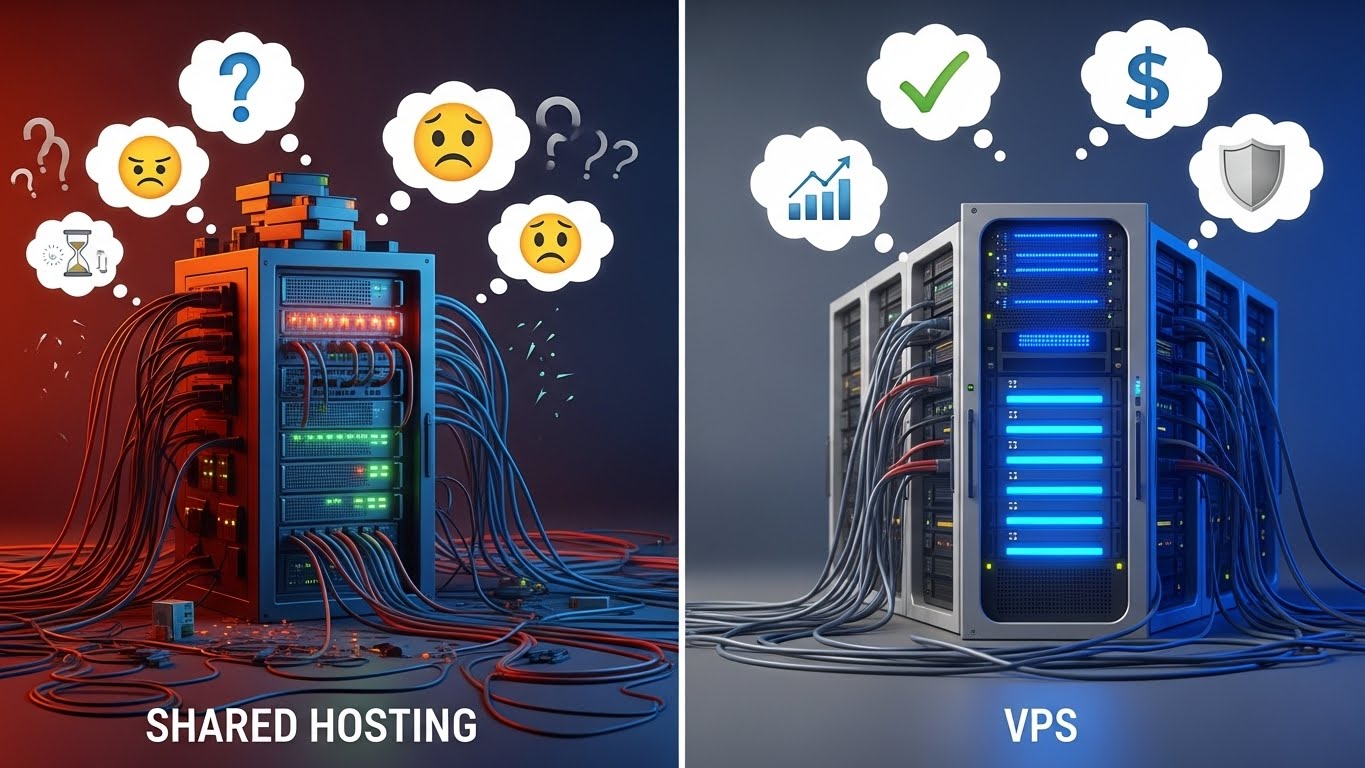
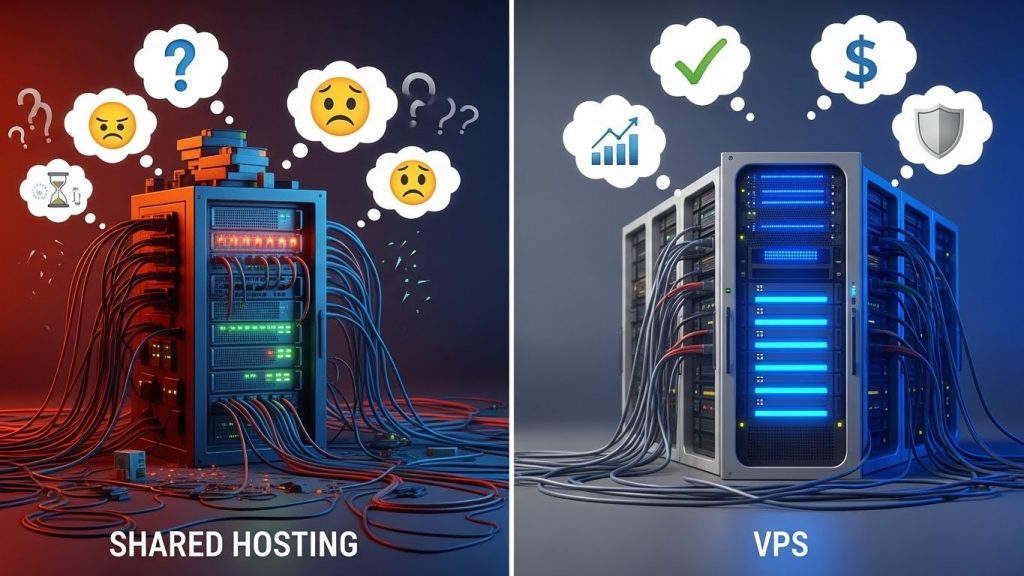
Shared hosting means your website lives on a server that also hosts many other websites. All of them use the same CPU, RAM, storage, and bandwidth. This shared environment helps keep hosting costs low, which is why it is so popular for beginners.
The downside is that your website performance depends on how other websites behave. If one site consumes too many resources, your site may slow down or even become temporarily unavailable. You also have limited control over server settings and software configurations.
Shared hosting works best for low traffic websites that do not require custom setups or high performance.
What Is VPS Hosting?
VPS hosting splits one physical server into several virtual servers. Each VPS receives its own allocated resources and operates independently. Even though the physical machine is shared, your website behaves like it is running on a private server.
This setup offers consistent speed, better stability, improved security, and much greater control. VPS hosting is designed for websites that have outgrown shared hosting but are not ready for the cost of a dedicated server.
Clear Signs It Is Time to Upgrade to VPS Hosting
There is no fixed rule that tells you exactly when to upgrade. Instead, there are clear warning signs that indicate shared hosting is no longer enough.
1. Your Website Is Getting Slower
Slow loading is often the first problem website owners notice.
On shared hosting, performance depends on everyone else using the same server. If another website experiences a sudden traffic spike or runs heavy scripts, your site can slow down even if nothing is wrong on your end.
Slow websites lead to:
- Frustrated visitors
- Higher bounce rates
- Lower search engine visibility
- Missed sales and inquiries
If your website remains slow even after image compression, caching, and code optimization, the hosting environment is usually the issue. VPS hosting solves this by providing dedicated CPU and RAM that remain available for your site at all times.
2. Your Traffic Has Increased Consistently
Traffic growth is a positive sign, but shared hosting is not built to handle steady increases.
As traffic grows, shared servers may struggle with:
- Longer page load times
- Limited bandwidth
- Server timeouts during peak hours
- Temporary suspensions due to resource overuse
VPS hosting is designed to handle higher visitor volumes because resources are reserved for your website. This ensures smooth performance even during marketing campaigns, seasonal spikes, or viral traffic.
3. Your Website Experiences Frequent Downtime
Downtime affects credibility, revenue, and search rankings.
On shared hosting, downtime is often caused by:
- Overloaded servers
- Maintenance activities affecting all users
- Security issues triggered by neighboring websites
Because you share the same environment, you are affected by problems that are completely outside your control. VPS hosting isolates your website, significantly reducing downtime caused by other users.
4. You Are Running an Ecommerce or Payment Based Website
If your website processes payments or stores user information, security becomes critical.
Shared hosting environments carry higher risk because:
- A single compromised site can affect others
- Security rules are basic and generic
- Compliance requirements are harder to meet
VPS hosting offers stronger isolation, advanced firewall configurations, and better access control. This makes it a safer choice for ecommerce stores, subscription platforms, and membership websites.
5. You Need More Control and Customization
Shared hosting limits what you can do at the server level.
You usually cannot:
- Install custom software
- Modify server configurations
- Choose your preferred operating system
- Fine tune performance settings
VPS hosting provides root level access, allowing full customization. This is especially important for developers, growing businesses, and applications with specific technical requirements.
6. Your Website Uses More Resources Than Allowed
Shared hosting plans enforce strict resource limits to protect other users.
You may see warnings such as:
- CPU usage exceeded
- Memory limits reached
- File or inode restrictions
These limits can stop your website from growing. VPS hosting provides guaranteed resources that are not shared with unrelated websites.
7. You Are Managing Multiple Websites
Running several websites on shared hosting often leads to poor performance and security concerns.
With VPS hosting, you can allocate resources properly, isolate websites, and manage everything from one environment. This makes VPS hosting ideal for agencies, freelancers, and business owners managing multiple projects.
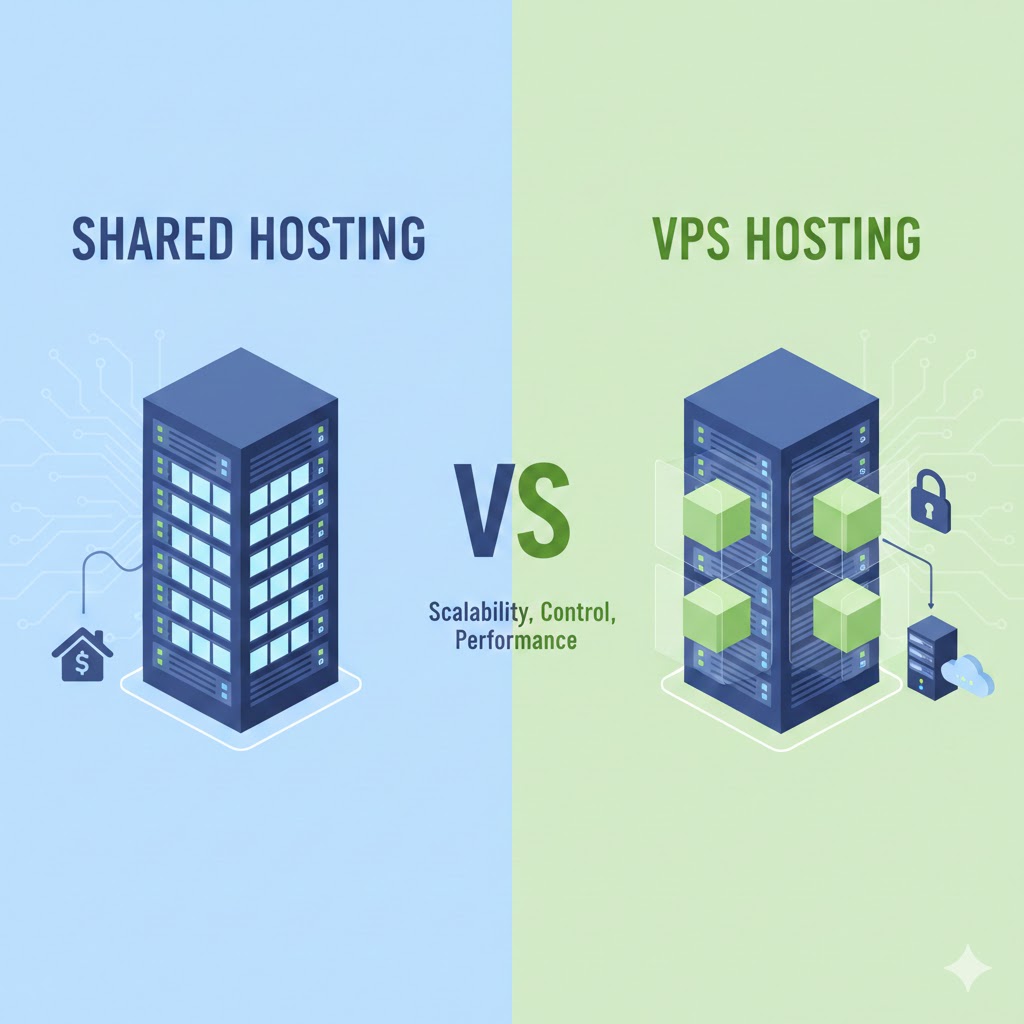
Shared Hosting vs VPS Hosting (Quick Comparison Table)
| Sr.no | Feature | Shared Hosting | VPS Hosting |
|---|---|---|---|
| 1. | Resource Allocation | Shared across many sites | Dedicated resources |
| 2. | Performance | Inconsistent | Stable and reliable |
| 3. | Security | Basic protection | Advanced isolation |
| 4. | Customization | Very limited | Full flexibility |
| 5. | Traffic Handling | Low | Medium to high |
| 6. | Scalability | Restricted | Easy upgrades |
| 7. | Control Access | No root access | Root level control |
| 8. | Best For | Small websites | Growing businesses |
How VPS Hosting Supports Business Growth
Upgrading hosting is not just a technical decision. It directly impacts long term growth.
a) Better User Experience
Fast websites keep visitors engaged, reduce bounce rates, and increase conversions. Speed is now an expectation, not a luxury.
b) Improved SEO Performance
Search engines favor websites that load quickly and remain available. VPS hosting improves uptime and performance, which supports better rankings over time.
c) Stronger Security and Trust
Visitors trust websites that are secure and stable. VPS hosting allows advanced security practices that protect customer data and business reputation.
d) Scalability for the Future
VPS hosting allows easy upgrades to CPU, RAM, or storage without changing servers. This makes growth smooth and predictable.
Is VPS Hosting Difficult to Manage?
Many website owners assume VPS hosting is complex.
Unmanaged VPS plans require technical skills, but managed VPS solutions remove this challenge. With managed VPS hosting, the provider handles server setup, updates, security patches, and monitoring.
This makes VPS hosting accessible even for users with limited technical experience.
Who Should Upgrade to VPS Hosting?
VPS hosting is ideal for:
- Growing blogs
- Ecommerce stores
- Business websites
- Developers and agencies
- SaaS platforms
- High traffic projects
If your website plays a serious role in revenue or brand visibility, VPS hosting becomes a smart and practical upgrade.
Choosing the Right VPS Hosting Provider
When upgrading, it is important to choose the right provider.
Look for:
- Reliable uptime
- SSD or NVMe storage
- Flexible scaling options
- Strong security features
- Responsive technical support
Providers like LunarVPS focus on performance, stability, and scalability, making them suitable for websites that have outgrown shared hosting and need room to grow.
FAQs – (Frequently Asked Questions)
Q1. When should I move from shared hosting to VPS?
When your website becomes slow, traffic increases, or security and control needs grow.
Q2. Will VPS hosting improve website speed?
Yes. Dedicated resources result in faster and more consistent performance.
Q3. Is VPS hosting expensive compared to shared hosting?
It costs more, but the benefits justify the upgrade as your site grows.
Q4. Do I need technical knowledge to use VPS hosting?
Managed VPS plans do not require technical expertise.
Q5. Can I host multiple websites on a VPS?
Yes. VPS hosting is well suited for hosting multiple websites.
Q6. Is VPS hosting more secure than shared hosting?
Yes. VPS environments provide better isolation and stronger security options.
Q7. Does upgrading hosting improve SEO?
Better speed and uptime can positively impact SEO performance.
Ready for better speed and stability?
If your website has outgrown shared hosting, upgrading to a VPS can make a real difference. Explore LunarVPS solutions designed to deliver consistent performance, stronger security, and easy scalability as your website grows.
You Might Also Like This:
- Shared Hosting vs VPS Hosting: Which Is Best for High-Traffic Websites
- How To Optimize VPS Hosting for High Traffic Websites (Best Practices)
Conclusion:
Upgrading from shared hosting to VPS hosting is a natural step in a website’s growth journey. When traffic increases, performance slows, and security requirements become more important, shared hosting often becomes restrictive.
VPS hosting offers a balanced solution with better speed, reliability, and flexibility. For websites that matter to business success and long term growth, upgrading at the right time creates a stronger foundation for the future.
Get more stuff
Subscribe to our mailing list and get interesting stuff and updates to your email inbox.
Thank you for subscribing.
Something went wrong.
Latest Posts
When Should You Upgrade from Shared Hosting to VPS?
Shared Hosting vs VPS Hosting: Which Is Best for High-Traffic Websites?

How to Optimize Your VPS for Maximum Speed and Performance
Comments
Shared Hosting vs VPS Hosting: Which Is Best for High-Traffic Websites? – Blog | LunarVps
[…] When Should You Upgrade from Shared Hosting to VPS? […]